


EDITOR’S NOTE: This CNN Travel series may have adjacent ads by the country it highlights. CNN retains full editorial control over subject matter, reporting and frequency of the articles and videos, in compliance with our policy.
The security lines at the entrance move with airport-like efficiency. Beyond them, the concrete of the 21st century falls away, replaced by creamy pillars and marble paving stretching into the distance, with green hills beyond.
It feels like stepping back 2,000 years in time.
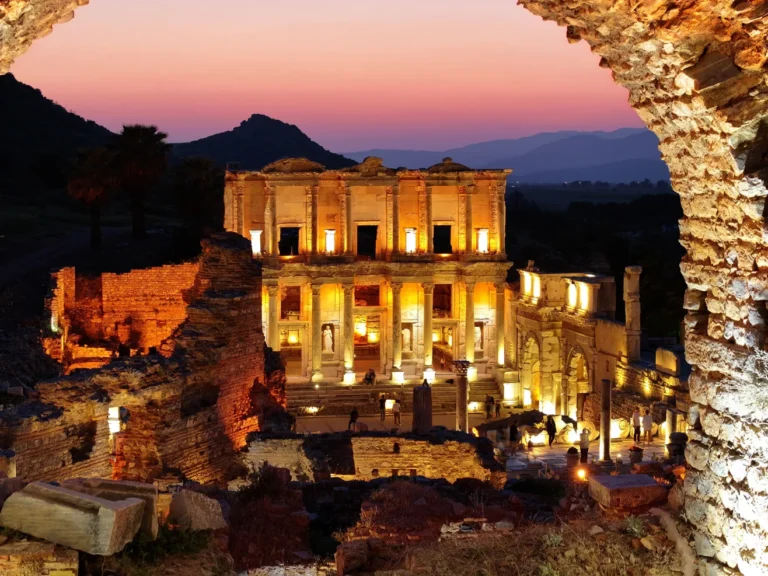
In a country overflowing with archaeological treasures, the ancient city of Ephesus, in western Turkey’s İzmir Province, remains the crown jewel. Around 2.5 million people visited the remains of this Greco-Roman port city in 2025. Founded in the 10th century BCE the 1,600-acre UNESCO World Heritage site is around 10 times the size of Disneyland — packed with so many historical marvels it’s almost overwhelming.
And it’s always been popular.
“In the summer season, 70,000 ships were coming to Ephesus,” says tour guide Fatma Günaltay, leading visitors downhill along the sacred road that once connected the city to the 6th-century BCE Temple of Artemis, one of the Seven Wonders of the Ancient World. “This city was very wealthy.”
Built in the estuary of what was once the River Kaystros, near the Aegean coast, Ephesus thrived as a trading hub connecting east and west. Leaders including Alexander the Great and Antony and Cleopatra left their mark here. The ruins explored today largely date from the city’s time as a busy Roman metropolis and remain among the best-preserved examples from that era.
Ancient elegance
Curetes Street, one of the city’s three main thoroughfares and its streets are still paved with marble that can become slippery when it rains. Statues of prominent citizens line the route, many missing heads or limbs, while religious and civic buildings once painted in bright colors now appear butter-yellow.
.gif)


0 Comments